MORE OF EVERYTHING 2026-10-04
There is an infinite number of moments I wish to capture; so much beauty that deserves to be preserved and revisited. That is precisely why I photograph. That, and the desire to master each element that harmonises to create the final piece I envision. Over the past few weeks, I’ve found myself making more frequent journeys down to Ottenby on southern Öland, as well as venturing to places entirely new to me. And everywhere I look, the wildlife and the images are simply waiting. We are all profoundly fortunate to occupy this world at this very moment.
THE RED-FOOTED FALCON HYPnOTIZED ME 2026-09-20
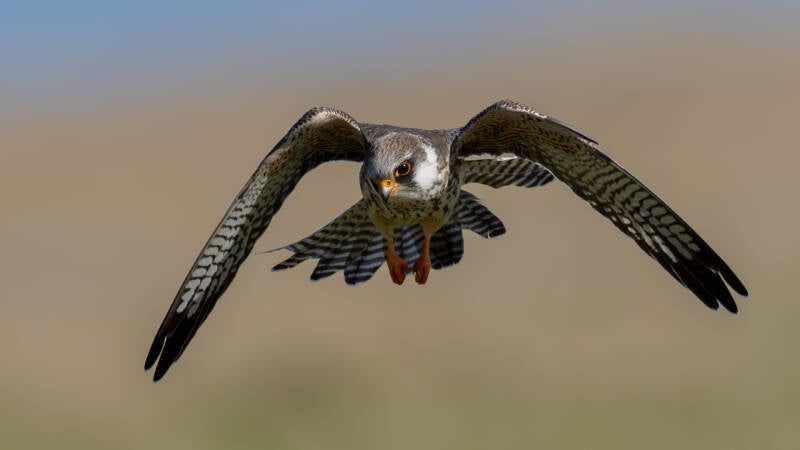
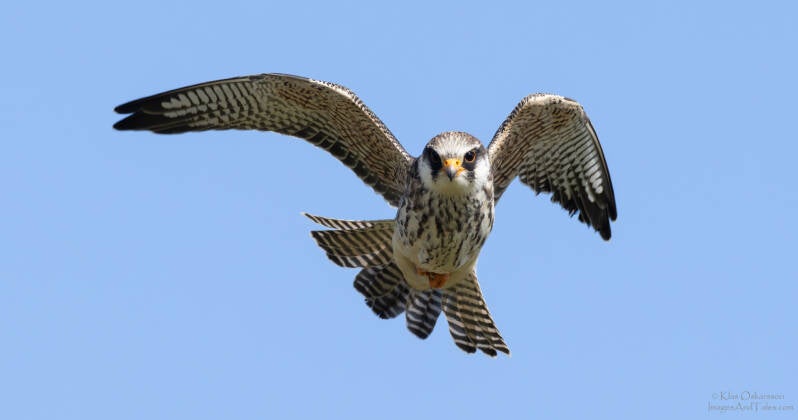
Following my initial encounter with this falcon, I felt reasonably content with the images I’d captured. Yet, upon returning to the southern cape of Öland with the primary objective of photographing Montagu's harriers and kestrels, I crossed paths with the red-footed falcon once more. Regrettably, I was rather exhausted after an entire day of trekking and shooting. I lacked that sharp focus I strictly demand of myself, and my high-speed CFexpress cards were completely full. In spite of this, a number of beautiful shots were salvaged, even if I missed the truly action-packed moments due to the slow performance of my SD-cards. The falcon pictured here might very well be the most photographed falcon in Sweden this year, across all categories...
KESTRELS, KESTRELS, KESTRELS - THEY ARE EVERYWHERE 2026-09
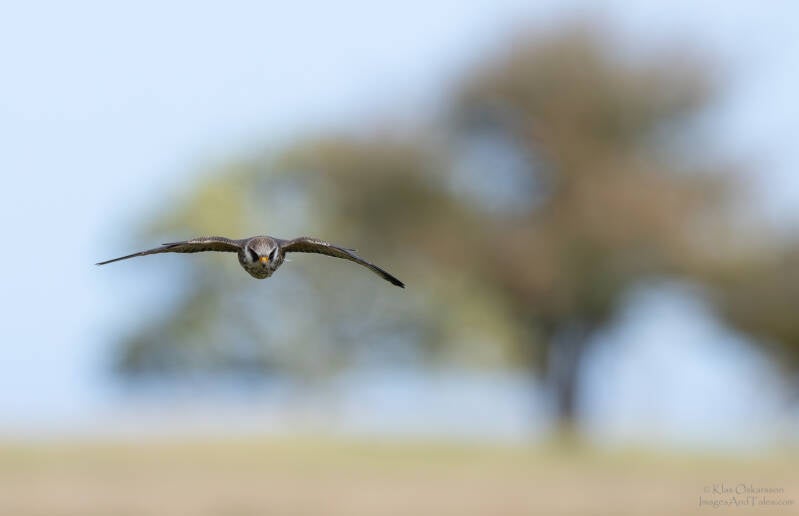
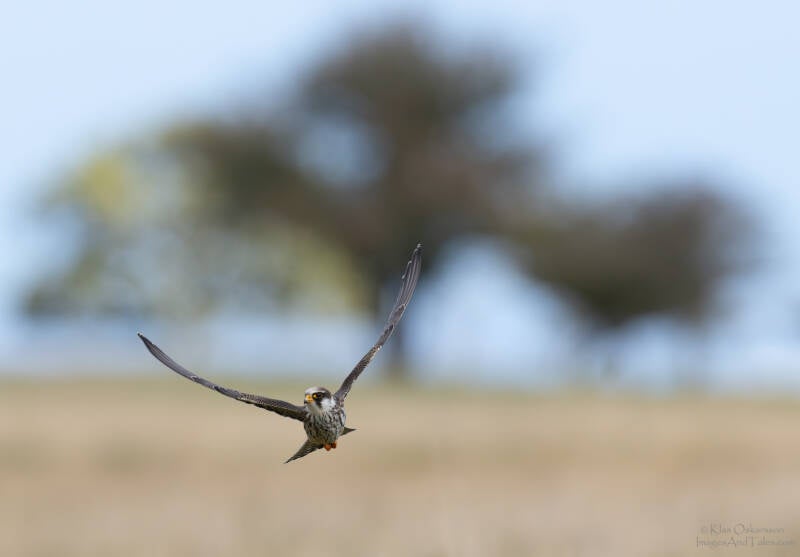
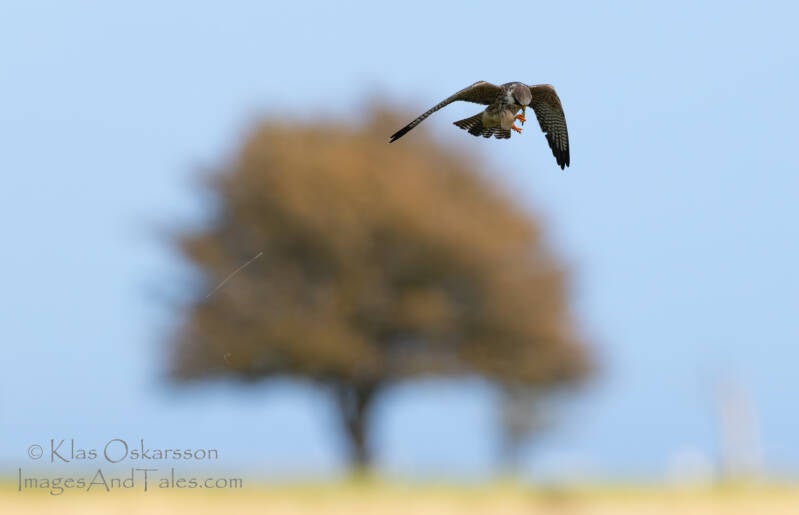
In keeping with last year's trends, kestrels have been abundant at the southern tip of Öland during September. They have been foraging for grasshoppers, enjoying a remarkably successful harvest. My gear of choice for capturing them this year has been the Canon R5 Mark II alongside a Canon EF 600mm f/4 IS III. These falcons possess a magnificent elegance when hunting, making the task of tracking their movements through the lens a truly marvelous challenge
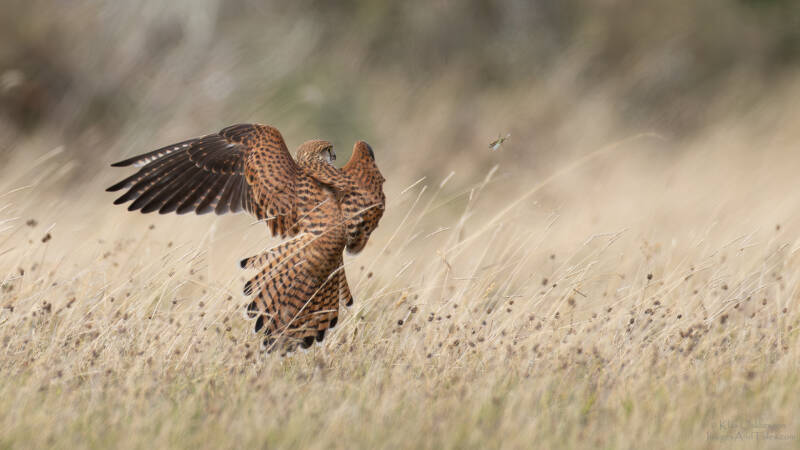
Falcon flamenco
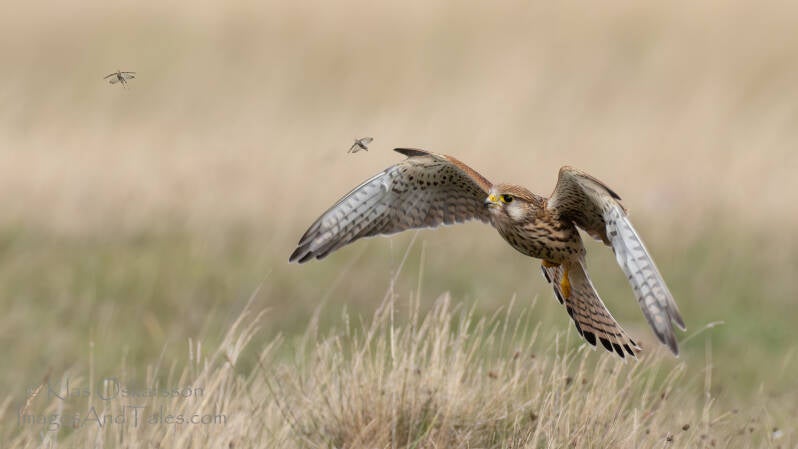
One for each foot!


Eurasian squirrels in motion 2026-09-15
Just a stone's throw from Nybro lies the Svartbäcksmåla nature and leisure area, which is currently positively teeming with squirrels. In essence, you can pitch up just about anywhere in the woods and wait a short while. Within minutes, you’ll begin to hear—and with a spot of luck, catch sight of—these creatures scrambling, dashing, and bounding about in their quest for food. Ever entertaining and utterly delightful


Red-footed falcon on Öland 2026-09-06
In early September 2026, a red-footed falcon was observed at the Ottenby Nature Reserve on southern Öland. The juvenile bird could be admired on the Schäferiängarna meadows. Red-footed falcons typically breed on the steppes of Eastern Europe. During August and September, the species moves south towards its wintering quarters in Africa, and it is not uncommon for juvenile birds to end up in Sweden during this autumn migration. They are often drawn to open environments such as coastal meadows and alvar plains, where they may linger for several days to hunt insects. I had the pleasure of visiting Schäferiängarna and capturing a few images of this beautiful falcon.
#RedFootedFalcon #FalcoVespertinus #Schäferiängarna #KlasOskarsson #ImagesAndTalesCom


Öland and Björnö 2026-05-16
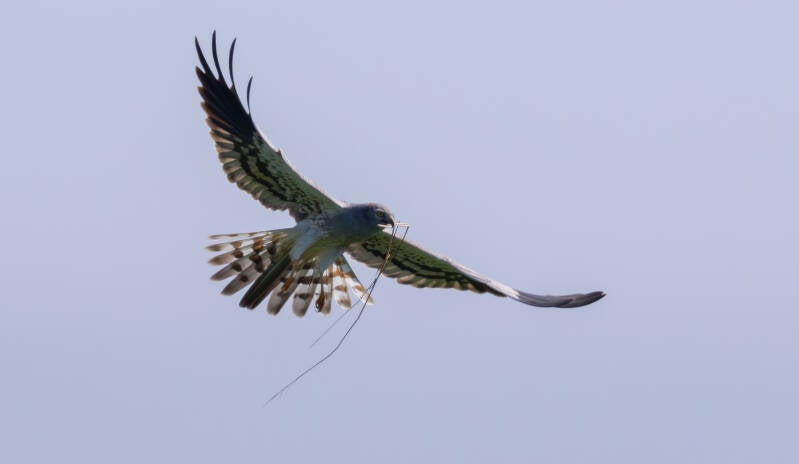
For the past fortnight, I had been contemplating a trip to Öland in the hope of photographing Montagu’s harriers, whose population is steadily recovering. Yesterday, I finally managed to set off. Eastern Öland, particularly south of Stenåsa, is widely regarded as prime territory for Montagu’s harriers, so my plan was to begin there. However, I didn’t quite make it that far. Just south of Gårdby, I noticed an area that appeared biologically diverse and decided to pull over. While having a cup of coffee and donning my camouflage gear, I spotted a male Montagu’s harrier quartering over a nearby field. Tread carefully so as not to disturb any potential nests, I followed the edge of a ploughed field along a dry-stone wall for about fifty yards. There, I sat motionless beneath a small tree. After some forty minutes, I caught sight of a male Montagu's harrier approaching in the distance. A few minutes later, he was flying in my immediate vicinity. He was gathering nesting material, which he deposited some 150 yards away from where I sat. He made three such trips before vanishing once more.
I have just reported this potential nesting site to Artportalen (the Swedish Species Observation System). Hopefully, this will allow volunteers or landowners to protect the nest, ensuring it isn't destroyed during the silage harvest.
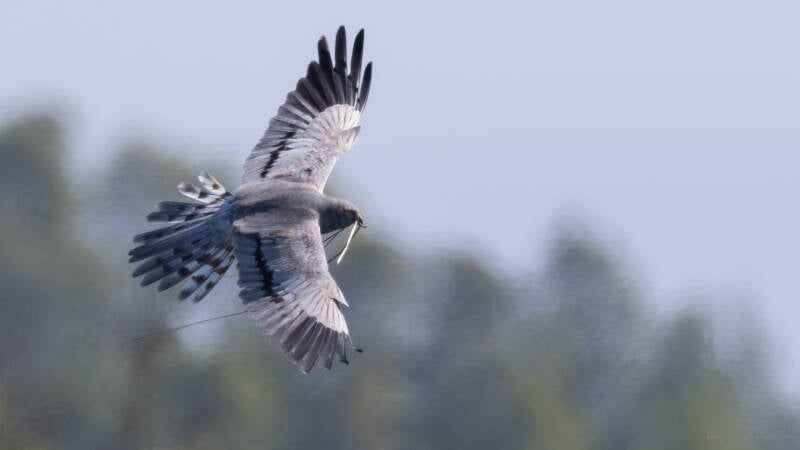
Once I was finished with the harrier, I spent some time stalking the margins between a woodland patch and the open ground. This yielded a few shots of a European goldfinch,a yellowhammer,a linnet, a common crane, and a lesser whitethroat (Curruca curruca).


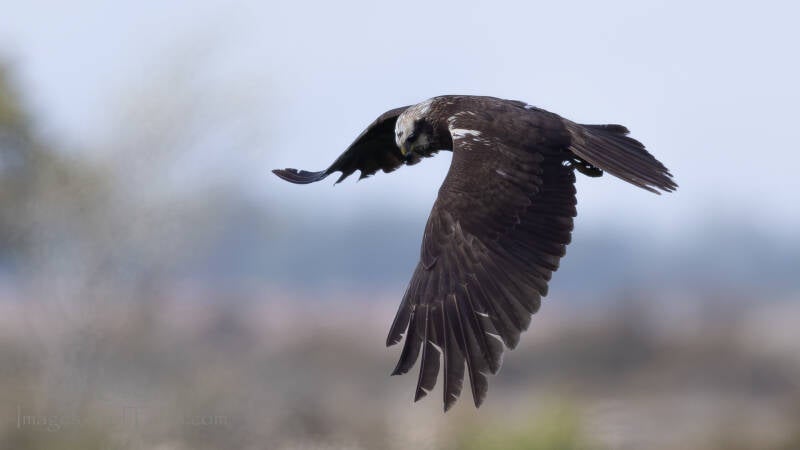
Afterwards, I drove further south towards Segerstad. At the turning for the lighthouse, I parked up and photographed a female marsh harrier hunting over a field. The walk down to the lighthouse was delightful. The birdwatchers gathered there were twitching a red-footed falcon and a red-breasted flycatcher. I chose instead to focus my efforts on photographing skylarks, spotted flycatchers and willow warblers.


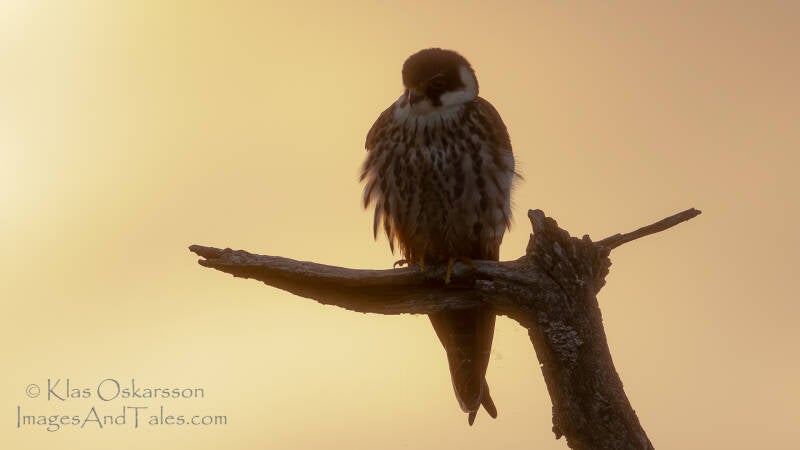
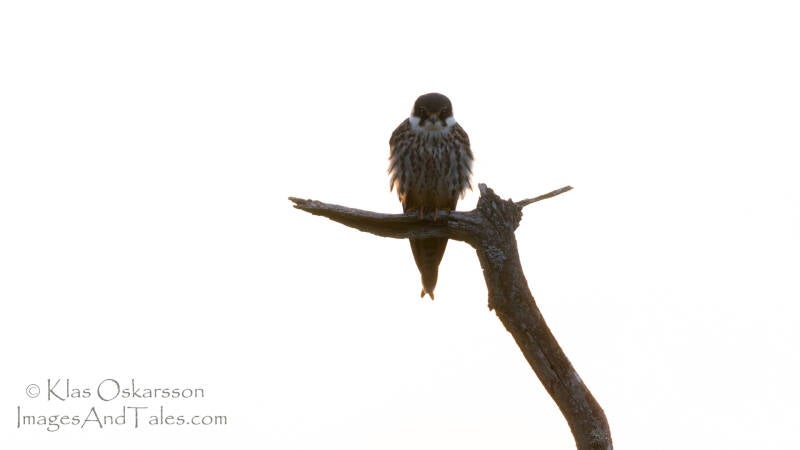
Later, I headed north to Färjestaden to have dinner with my parents. During what turned out to be a rather late supper, I decided to make a stop at Björnö on my way home. I had a nagging suspicion that I had dropped a spare battery for my Canon R3 there a few days prior. Thus, it was in the very last rays of daylight that I parked at the Björnö Nature Reserve. I briefly considered leaving the camera in the car, given that it was practically pitch black. Ultimately, however, I slung my Canon R5—fitted with the Canon EF 600mm f/4L IS III USM—over my shoulder. And thank goodness I did. As I stood on a small knoll, scanning the ground where I suspected the battery might be, I realised a hobby was perched on a large, fallen oak branch—precisely where I thought I’d lost it.
I snapped a few dreadful shots and then began a wide detour to approach the falcon under cover. Eventually, using a tree trunk as a blind, I managed to get some decent shots. I then risked moving even closer. For the final fifteen yards, I crawled on hands and knees to seek cover behind a juniper bush. The bird remained stationary. Nor did it seem at all bothered when my lens poked through the juniper. What an extraordinary encounter! To top it off, the battery was lying exactly where I thought I’d dropped it.
As I approached the car in the gathering dusk, I walked across a wooded knoll to see if any owls had stirred. A roe deer, startled by my presence, bolted through the oaks, causing me to turn my head. And what should I see? Just twenty yards away, a tawny owl sat completely out in the open on a branch. I managed to get a few frames before it decided to take flight. Unfortunately, I was so close that I couldn't capture much of the beautiful surroundings. A 50mm lens would certainly have come in handy right then.


A trip to Flo RIda
When I turned 50 last year, my brother presented me with a truly magnificent birthday gift: a trip for myself and my two children to Jacksonville, Florida, where he resides with his family. The journey was booked for late April to early May of this year.
Packing my camera bag, however, proved to be quite a conundrum. On my last visit, I lugged around a Canon EF 400mm f/2.8L IS USM. For a long while, I contemplated bringing my Canon EF 600mm f/4L IS III USM this time, but ultimately decided that the lens was simply too precious to haul across the Atlantic. Furthermore, it is rather cumbersome to manage in the car during excursions, particularly with the children in tow.
The solution was to order a Canon RF 100-500mm F4.5-7.1L IS USM from Cotswold Cameras. The lens performed admirably. Although I rarely made use of the zoom functionality—keeping it fully extended at 500mm most of the time—the close-focusing distance is superb, ranging from 0.9m (at 100mm) to 1.2m (at 500mm). The autofocus is snappy, and the lens delivers impressive sharpness. Nonetheless, I did find myself missing the ability to isolate the subject from the background using a wide aperture. I also brought along a Canon EF 300mm f/2.8L IS USM, though this was only deployed during the odd early morning.
We spent eleven days there, successfully balancing family life with a fair amount of nature excursions and photography. Below is a selection of photographs from the trip.


Winter temperatures Öland 2026-01-10
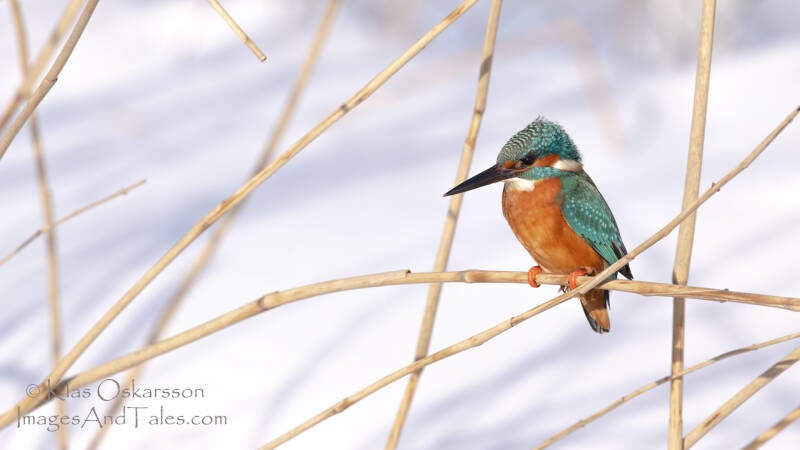
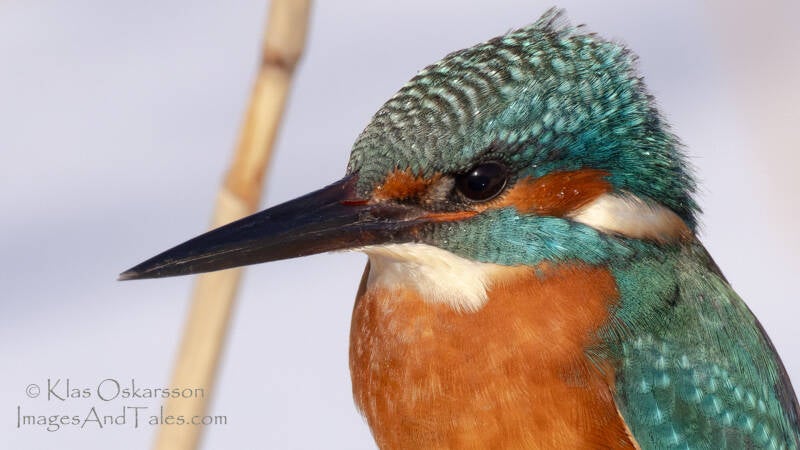
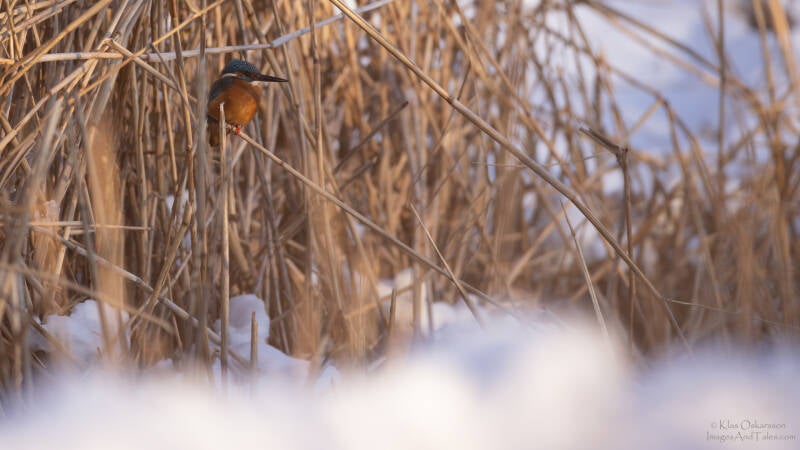
I clearly imagined a blue harrier against a snow white background. I did not accomplish that this day. But I got decent pictures of something else. A vibrant kingfisher that spent part of the winter by the Mörbylånga water treatment plant. The sun was out that day, but it was at least minus ten degrees. I found a bank to hide behind near the small stream of running water leaving the plant. I lay still in the snow there until the kingfisher landed just nine metres in front of me. At first, it perched where some reeds blocked the view, but then it made a small move that made all the difference. Such a beautiful creature.
Vanishing shades of blue and grey - Öland 2026-01-06
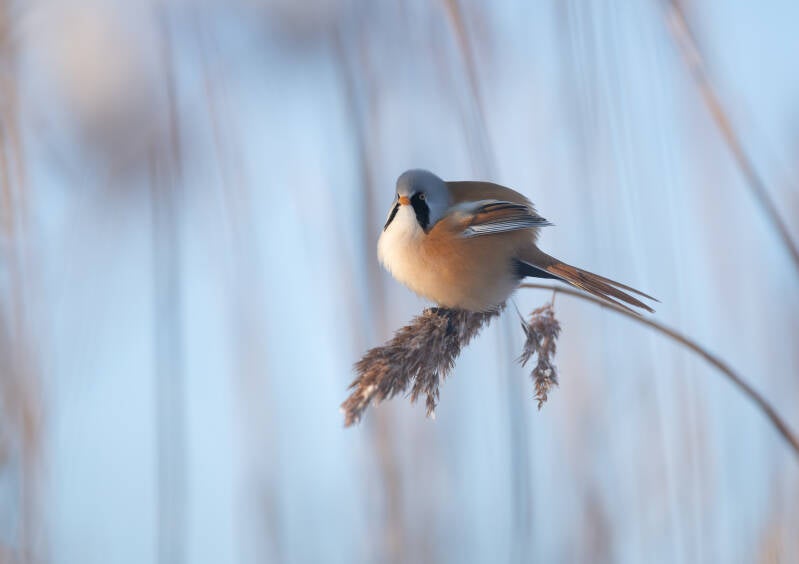
Last Tuesday, I headed over to Öland. My objective was to try and photograph kingfishers and hen harriers. I parked by the Mörbylånga water treatment works and spent a few hours exploring the area. The outing yielded some decent shots of bearded tits and my first-ever photos of a female hen harrier. At one point, a kingfisher landed on a reed just six or seven metres away from me in perfect light, while I was standing in full view. There was no chance of taking a photo, unfortunately; the bird took flight the moment it realised I wasn't a bush... but it was a magnificent sight.
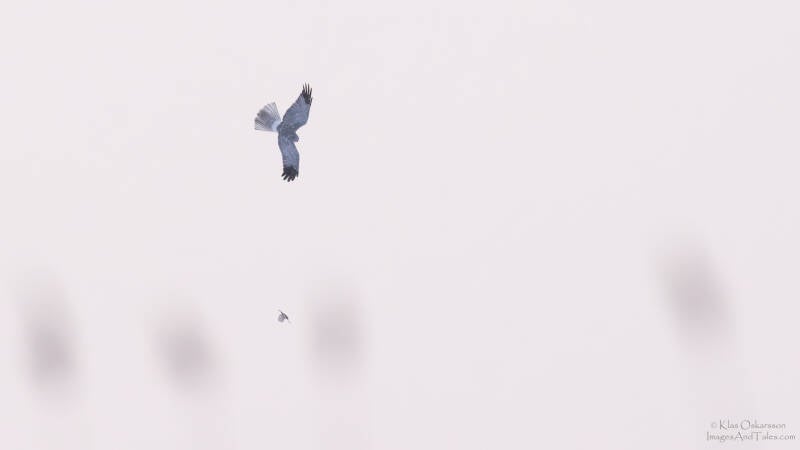
Despite that wonderful encounter, it wasn't the kingfisher that truly left an impression on my retina. In the afternoon, as I sat in the snow photographing bearded tits in the cold, the birds suddenly retreated deep into the reeds with a great deal of fuss. I glanced upwards and caught the eye of a grey-blue shadow from above. A male hen harrier aborted its dive in my direction and vanished behind an embankment. My goodness, what a stunning bird. And what a photo that would have been. Next time...


Todays walkabout 2025-12-28
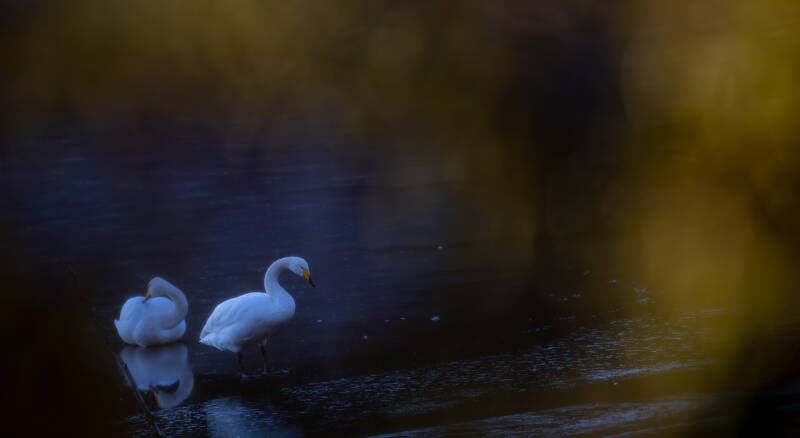
I went for a long walk with my camera today. My first stop was an old oak tree where I had previously spotted a tawny owl at dusk. To my delight, there was one perched in a crotch of the tree, basking in the sun. It was difficult to find an angle where the owl wasn’t obscured by branches, but I eventually found a spot that worked. After that, I wandered over to Barkeström and the Barka pond. Found a jay on the way. A pair of whooper swans were out on the water, calling to one another. The light was beautiful, and I managed to sneak relatively close without startling them. Sunlit pine needles provided a lovely, soft foreground for the swans.


My hide 2025-12-21

Buzzard, Buteo buteo, Hälleberga Småland 20251220. Canon R3 with Canon EF 600mm f/4L IS III USM. ISO 1000, f4, 1/500 s. Beanbag as support. Focusing distance 9,52m.
In August 2024, I embarked upon the construction of a woodland cabin for my children. The original blueprint was simple: I would lay the foundations, and they would take up the mantle of building the rest. However, I soon found myself consumed by a feverish obsession; a manic drive took hold, and the children were never given the opportunity to lend a hand. As the structure ascended, it became increasingly apparent that the project had transmuted into a dedicated photography hide.
Having exhausted every scrap of salvaged timber I could lay my hands on, I was eventually compelled to purchase some rough-sawn tongue-and-groove boards for the roof. All proceeded smoothly until I wrestled with the final plank, which had gone stubbornly askew. It cost me a taxing half-hour, perched precariously atop a small, folding aluminium stepladder. Eventually, I coaxed the timber into place, sweat pouring down my brow.
Job done—or so I thought. As I descended the one-point-four-metre ladder, it began to lurch on the uneven forest floor. Such wobbles were, alas, not an entirely new experience for me. I attempted a nimble leap to the ground, intending to land with some semblance of grace.
However, as I touched down, my lower right leg struck one of the metal steps with sickening force. I looked down immediately to find the flesh quite literally shredded. The entirety of my weight had been driven into a sharp metallic edge, resulting in a gaping thirteen-centimetre laceration, some two-and-a-half centimetres deep. It was a grisly sight; the subcutaneous fat hung in tatters around the open wound.
Thanks to my mobile phone, my daughter, a clean tea towel, and a generous application of duct tape-followed by an ambulance and the sterling care of the Swedish health service-I eventually made a full recovery.
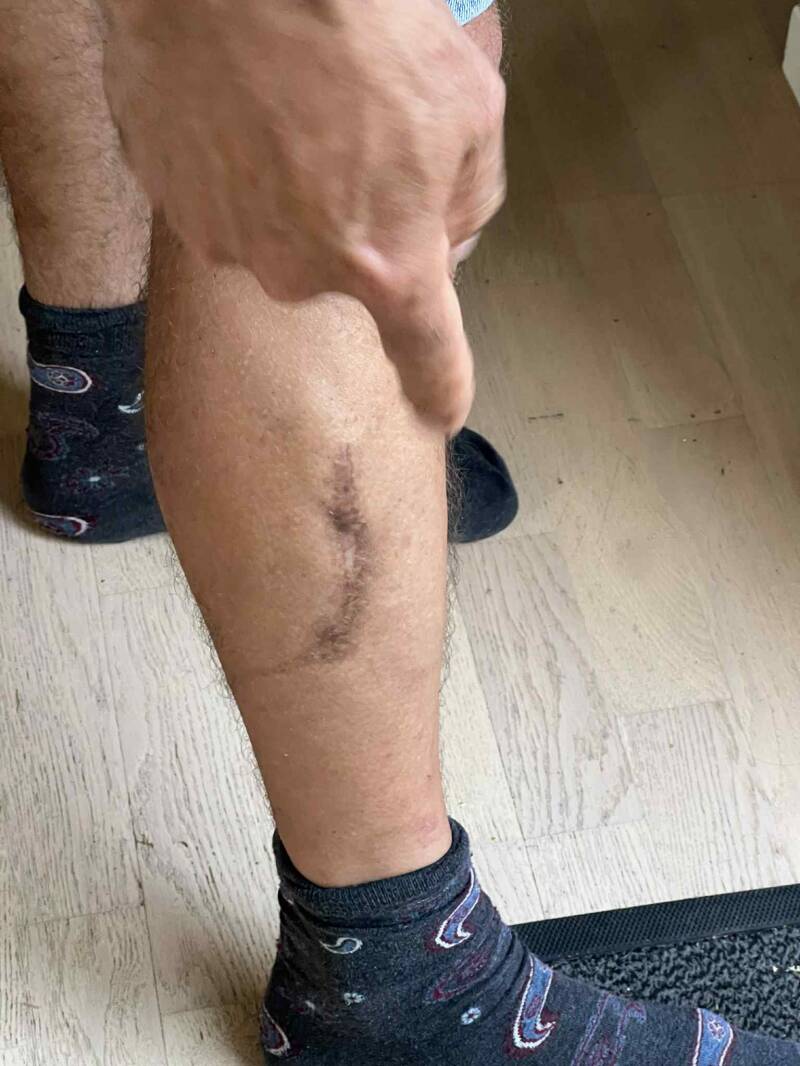
Building a hide is always worth the effort. The resulting scar one year after the accident.
Work on the hide was naturally suspended until this summer, when I finally set about the finishing touches and gave it a lick of paint. The hide’s official inauguration took place this week, and yesterday, the first buzzard ventured into my proximity. It was remarkably bold. When I first caught sight of it, the bird was perched on a branch a mere seventeen metres away. From there, it dropped to the forest floor, took a few tentative hops, and took flight once more, alighting in a willow tree just ten metres from my lens. I had never dared hope it would approach so closely without being spooked by the movement of the lens, yet it remained quite unbothered. The eye-detection autofocus on my Canon R3 performed impeccably. I must confess, I find it a superior companion in the field compared to the R5, though I do pine for the R5’s resolution when it comes to the business of editing.
On reflection, I was most pleased with the captures. The f4 aperture perhaps yielded a depth of field that was a touch too shallow, save for the frame where the buzzard turned its head to reveal a flawless profile. In the other shots, the tip of the beak lacks that critical bite. Perhaps stopping down to f5,6 would have been the wiser choice?
I also have a regular troupe of jays visiting the hide. I suspect we shall become quite well-acquainted; they seem more than happy to trade their charisma for a steady supply of peanuts.

Buzzard, Buteo buteo, Hälleberga Småland, 20251220. Canon R3 with Canon EF 600mm f/4L IS III USM. ISO 1250, f5, 1/500 s. Beanbag as support. Focusing distance 17,1 m.

Buzzard, Buteo buteo Hälleberga Småland, 20251220. Canon R3 with Canon EF 600mm f/4L IS III USM. ISO 1000, f4, 1/640 s. Beanbag as support. Focusing distance 15,5 m.

Buzzard, Buteo buteo, Hälleberga Småland 20251220. Canon R3 with Canon EF 600mm f/4L IS III USM. ISO 1000, f4, 1/640 s. Beanbag as support. Focusing distance 9,52m.

Eurasian jay, Garrulus glandarius, Hälleberga Småland 20251213. Canon R3 with Canon EF 600mm f/4L IS III USM. ISO 2000, f4, 1/250 s. Beanbag as support.
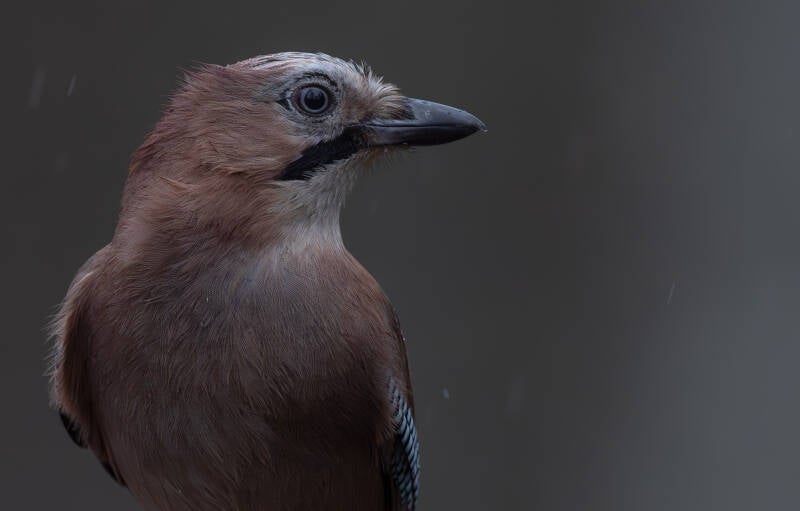
Eurasian jay, Garrulus glandarius, Hälleberga Småland 20251213. Canon R3 with Canon EF 600mm f/4L IS III USM. ISO 2000, f4, 1/320 s. Beanbag as support.